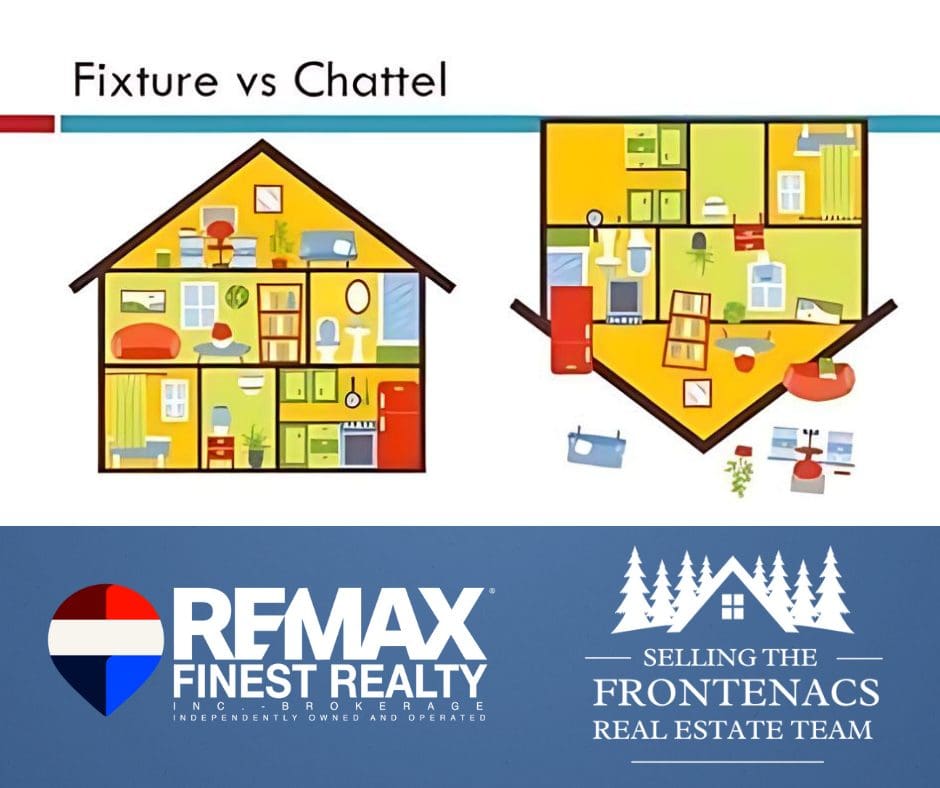
So, you’re selling your home—exciting times! But before you start packing boxes, let’s talk about an important detail that often causes confusion: what stays with the house, and what comes with you?
In real estate, we break this down into two categories: **chattels** and **fixtures**. Understanding the difference will help ensure a smooth transaction and avoid last-minute surprises. Let’s make this easy!
Chattels: Pack ‘Em Up!
Chattels are items that aren’t permanently attached to the property—they’re movable. If you can pick it up and take it with you without needing a toolbox, it’s likely a chattel. Think of them as your personal belongings that travel with you to your next adventure.
Examples of Chattels:
✔️ Furniture (couches, chairs, tables)
✔️ Appliances that are not built-in (a freestanding fridge or stove)
✔️ Area rugs and floor mats
✔️ Curtains (unless they are custom-fitted or attached to a rod that’s mounted to the wall)
✔️ Personal decor items (mirrors, artwork, lamps)
✔️ Patio furniture, BBQ (unless it’s built-in)
Fixtures: They Stay Put!
Fixtures are items that are physically attached to the property, either by being nailed, screwed, or built into the home. The general rule? If removing the item would cause damage or require repairs, it’s considered a fixture—and it stays with the house when you sell.
Examples of Fixtures:
✔️ Built-in appliances (a wall oven, built-in dishwasher, or microwave that’s mounted)
✔️ Light fixtures (chandeliers, sconces, ceiling fans)
✔️ Attached shelving and cabinetry
✔️ Curtain rods and blinds
✔️ Bathroom vanities, mirrors that are attached
✔️ Fences, trees, shrubs, and landscaping
✔️ TV wall mounts (even if you take the TV itself)
Grey Areas: What Needs to Be Clarified?
Some items can fall into a tricky middle ground. A good rule of thumb: if in doubt, discuss it upfront.
– Wall-mounted TVs: The TV itself is a chattel (it comes with you), but the wall mount is a fixture (it stays). If you want to take the mount, it should be specified in the agreement.
– Window Coverings: Blinds and attached curtain rods usually stay, but drapes can go.
– Appliances: If you’re planning to take your fridge, stove, or washer/dryer, make sure your agreement of purchase and sale specifies that they are excluded from the sale.
– Outdoor Playsets or Sheds: If it’s firmly anchored to the ground, it’s likely a fixture and stays. If it’s simply sitting on the lawn, it’s a chattel and can go with you.
Why Does This Matter?
Knowing what you’re leaving behind (and what you’re taking) helps prevent disputes between buyers and sellers. If a buyer expects something to stay, but you remove it, it could lead to legal headaches. Likewise, if you assume you can take something that’s considered a fixture, you might be in for an unpleasant surprise.
Pro Tip: Write It Down!
When selling your home, your real estate agent will help clearly outline what is **included** and **excluded** in the listing and the Agreement of Purchase and Sale. If you have any sentimental fixtures you want to keep—like Grandma’s chandelier—replace it before listing your home, or clearly state in the agreement that it’s not included.
Final Thoughts
Selling your home should be an exciting and seamless process, not a stressful one. Understanding chattels and fixtures ensures you know what stays and what goes, keeping both you and the buyer happy.
Have questions about selling your home? We’re here to help make the process smooth and stress-free! Reach out anytime—we’d love to chat. 😊
